What Telegram actually is in 2026 (and what it isn't)
If you're new to Telegram, here's an honest tour of what makes it different from WhatsApp, Discord, Signal, and iMessage — what it does well, what it doesn't, and what's free vs paid.
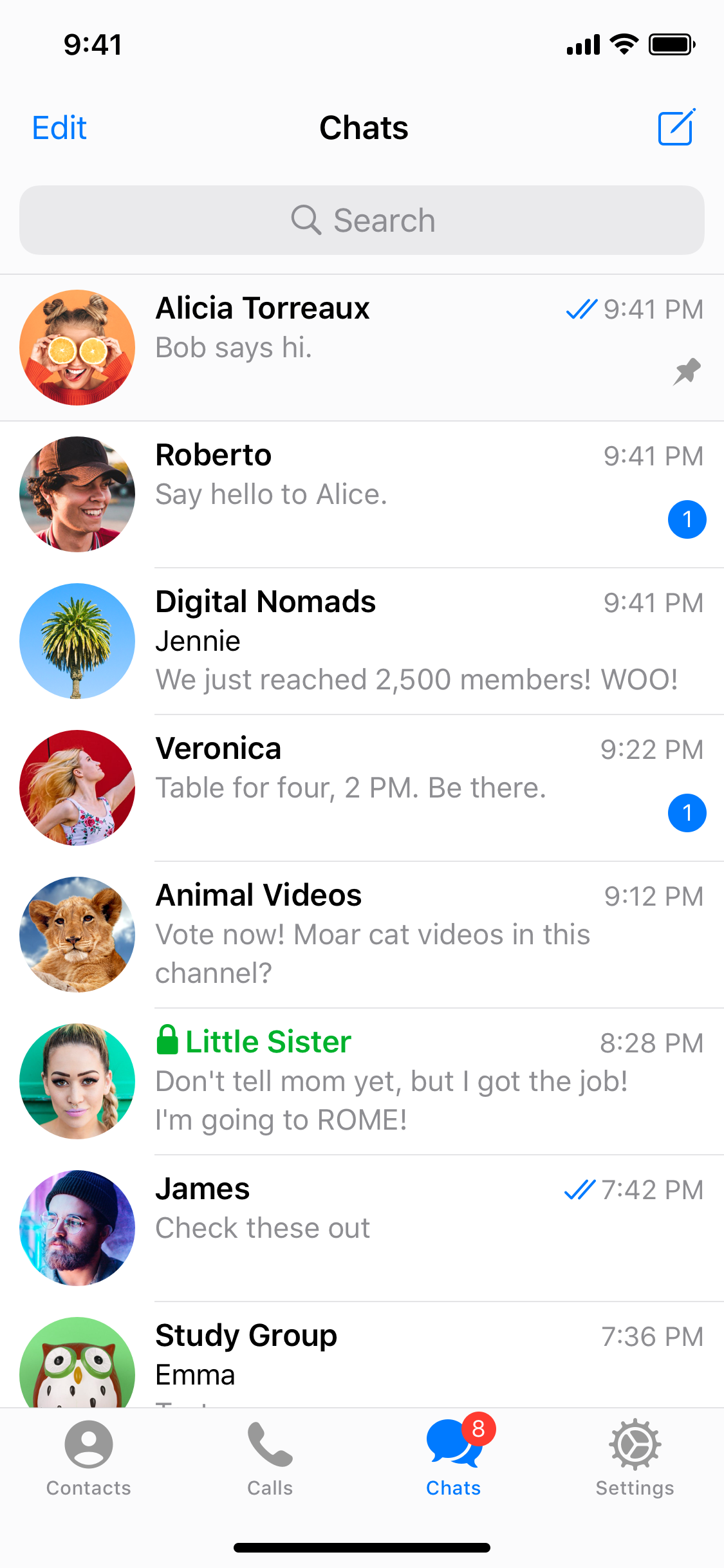
If you’re coming to Telegram from WhatsApp, iMessage, or Signal, the first impression is “this is just another messaging app.” It isn’t.
Telegram in 2026 is closer to a small operating system that happens to look like a messenger. It has chats, but it also has channels (broadcasts), groups (communities), bots (programs), Mini Apps (full HTML5 applications), an in-app payment currency (Stars), an integrated wallet on a real blockchain (TON), and a native ad platform.
Most of it is free. Some of it is paid. None of it is hidden behind ads in your face.
This guide is the one-page tour of what’s actually in there.
The two-line summary
Telegram is a free messenger with one billion monthly active users (more than half of them daily) that quietly evolved into a platform. You message friends like on WhatsApp, but you also follow news channels like on Twitter, join interest groups like on Discord, use bot apps like browser extensions, and pay for things like in a wallet — all without leaving the app.
The trade-off vs Signal: less privacy by default (more on this in a separate guide). The trade-off vs WhatsApp: more friction for the absolute basics. The advantage over both: a real platform underneath.
What’s in the app
Personal chats — one-to-one with anyone who has Telegram. Cloud-stored by default (sync across devices, search history). Optional Secret Chats are end-to-end encrypted, single-device, self-destructing.
Groups — up to 200,000 members. Threaded conversation, polls, slow mode, custom moderation tools. The “Discord without Discord” of 2026.
Channels — one-way broadcast surface. Owners post, subscribers read. The “Twitter without Twitter” — used by news outlets, creators, traders, communities, brands.
Bots — automated accounts you can chat with. Customer support, weather, games, AI assistants. Built by anyone via the Bot API.
Mini Apps — full HTML5 applications inside Telegram. Tap a button → an entire app opens with native chrome. Used for everything from games (Catizen) to productivity tools to wallets.
Stories — 24-hour ephemeral posts (since 2024). Premium users post on personal accounts; channels post once they hit Boost level 2.
Voice & video calls — one-to-one and group voice/video chats up to thousands of listeners. Live-streaming on channels.
Payments — Stars (Telegram’s in-app currency) for digital goods, fiat (Stripe etc.) for physical, TON for crypto-native flows.
That’s the surface. There’s much more under the hood (forums, custom emoji packs, anonymous numbers, NFT gifts), but those eight cover 95% of what 95% of users use.
What Telegram does better than the alternatives
- Multi-device sync, properly. Your chats live in the cloud (encrypted in transit, encrypted at rest server-side, but not end-to-end). Open Telegram on your laptop and everything’s there. WhatsApp added this in 2021 with caveats; iMessage requires iCloud; Signal stays single-device by design. Telegram has had this for a decade.
- Large groups that don’t fall apart. 200,000 members in a single group is technically possible and works. Combined with topics (forum mode), you get Discord-level community management without leaving a messenger.
- Channels as a first-class surface. You can broadcast to millions without an Instagram-style algorithm intermediating. Subscribers get every post, in order, in their normal chat list.
- Bots and Mini Apps without an App Store. A developer can ship a working app in a day, distribute it via a
t.me/yourbotlink, and never deal with Apple/Google review. - No tracking pixels in chats. Telegram doesn’t insert ads into your conversations. Sponsored Messages exist only on large public channels, not in DMs.
What it does worse
- Default encryption. Your normal chats are not end-to-end encrypted. Telegram can technically access them server-side. Use Secret Chats for sensitive content. (Signal-level paranoia? Use Signal.)
- Spam and scam channels are easier to bump into here than on iMessage or WhatsApp. Curation is on you.
- Discovery is intentionally weak. There’s no algorithmic feed pushing channels at you. You find good content via word-of-mouth.
- The product surface is wide. New users routinely don’t know what a “channel” is or how it differs from a “group” — both look like a chat in your list.
- Some features are confusing on iOS vs Android vs Desktop because they don’t all roll out at the same speed.
What’s free, what’s paid
Free, forever:
- All messaging (1:1, groups, channels)
- Voice & video calls and group voice chats
- Bots and Mini Apps you use as a regular user
- Following channels
- Sending Stars (Stars are bought separately)
- Most stickers, GIFs, voice notes
- The TON Wallet (you pay only network fees)
Premium (~$5/mo):
- Larger uploads (4 GB per file vs 2 GB)
- Faster downloads (uncapped vs capped)
- Voice-to-text on voice notes
- Custom emoji and emoji status
- Posting Stories from a personal account
- All Telegram Business features (opening hours, quick replies, AI bot connection — covered in a separate guide)
- A few prestige cosmetics (badges, profile colors)
Pay-per-use:
- Stars (~$0.013 each net) for buying digital goods inside bots and channels
- TON network fees (~$0.005 per transaction)
- NFT gifts and collectible usernames bought via Fragment
- Telegram Premium subscriptions for channels you support
You can use Telegram for years without ever paying. Many people do.
What Telegram is not
- Not a privacy-by-default messenger. It’s a feature-by-default messenger that has privacy options. If end-to-end encryption is non-negotiable for everything, use Signal.
- Not a social network. No followers in the Instagram sense. No likes that drive a ranking. Channels broadcast, you subscribe or you don’t.
- Not just for tech people. A 1B+ MAU app is mass-market. The advanced surfaces (Mini Apps, bots) are optional.
- Not WhatsApp with crypto. TON integration is real but optional. You can use Telegram for a decade and never touch a wallet.
- Not US-headquartered. Telegram is registered in the UAE and operates internationally. Pavel Durov, the founder, is a French/UAE/Russian citizen with a French passport. This matters for legal context but not for your daily use.
Where to go next
The natural next reads, in order:
- Your first hour on Telegram — install, set up, find people, send a message
- Channels vs groups vs bots vs Mini Apps — the decision tree for new users
- Privacy on Telegram, what’s actually private — the honest scoop on encryption and metadata
- Telegram Premium, is it worth it? — feature-by-feature for different personas
- Find good channels and stop following bad ones — discovery and curation
The rest of the site is for people who’ve crossed those bridges and want to build, sell, or run a business on top of Telegram. Come back here when you’re ready.
Read next
Channels vs groups vs bots vs Mini Apps — when to use what
A simple decision guide for new Telegram users: the four main surfaces, what each is for, and how to pick the right one in any situation.
Your first hour on Telegram
A step-by-step setup for someone installing Telegram for the first time — phone number, profile, privacy, finding people, joining your first channel and group, customizing the app.
Privacy on Telegram — what's actually private (and what isn't)
An honest, non-paranoid guide to what Telegram can and can't see, who else can see what, how Secret Chats actually work, and the privacy settings that matter most.